



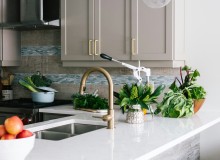

Quartz vs. Granite vs. Marble Counter Tops: Which Is Right for You?

Choosing the right counter top affects your kitchen for the next twenty years. Here's how the three most-asked-about materials compare.
Engineered Quartz
Quartz counter tops are made from roughly 90% crushed natural quartz blended with resins. They're non-porous, virtually maintenance-free, and available in patterns that imitate marble without marble's care requirements. Best for: busy family kitchens, rental properties, anyone who hates sealing stone.
Granite
Granite is a 100% natural igneous stone — every slab is unique. Highly heat-resistant and durable, but porous: it needs an annual sealer to repel oil and red wine. Best for: timeless looks, cook-driven kitchens, jobs where one-of-a-kind matters.
Marble
Marble is the most luxurious of the three and absolutely the most reactive. Even properly sealed Calacatta or Carrara will etch with lemon juice, vinegar, or coffee. Best for: showcase islands, baths, and homeowners who accept patina as part of the material's character.
How they stack up
- Maintenance: Quartz ≪ Granite < Marble
- Heat resistance: Granite > Quartz > Marble
- Stain resistance: Quartz > Granite > Marble
- Visual variation: Marble > Granite > Quartz
- Cost: Granite ≈ Quartz < Marble (for premium varieties)
Our Houston recommendation
Pair a quartz perimeter run with a marble or natural stone island accent. You get the durability where it matters (around the sink, stove) and the wow-factor where guests see it.
Browse our Prefab Kitchen Counter Tops or request a project-specific quote.